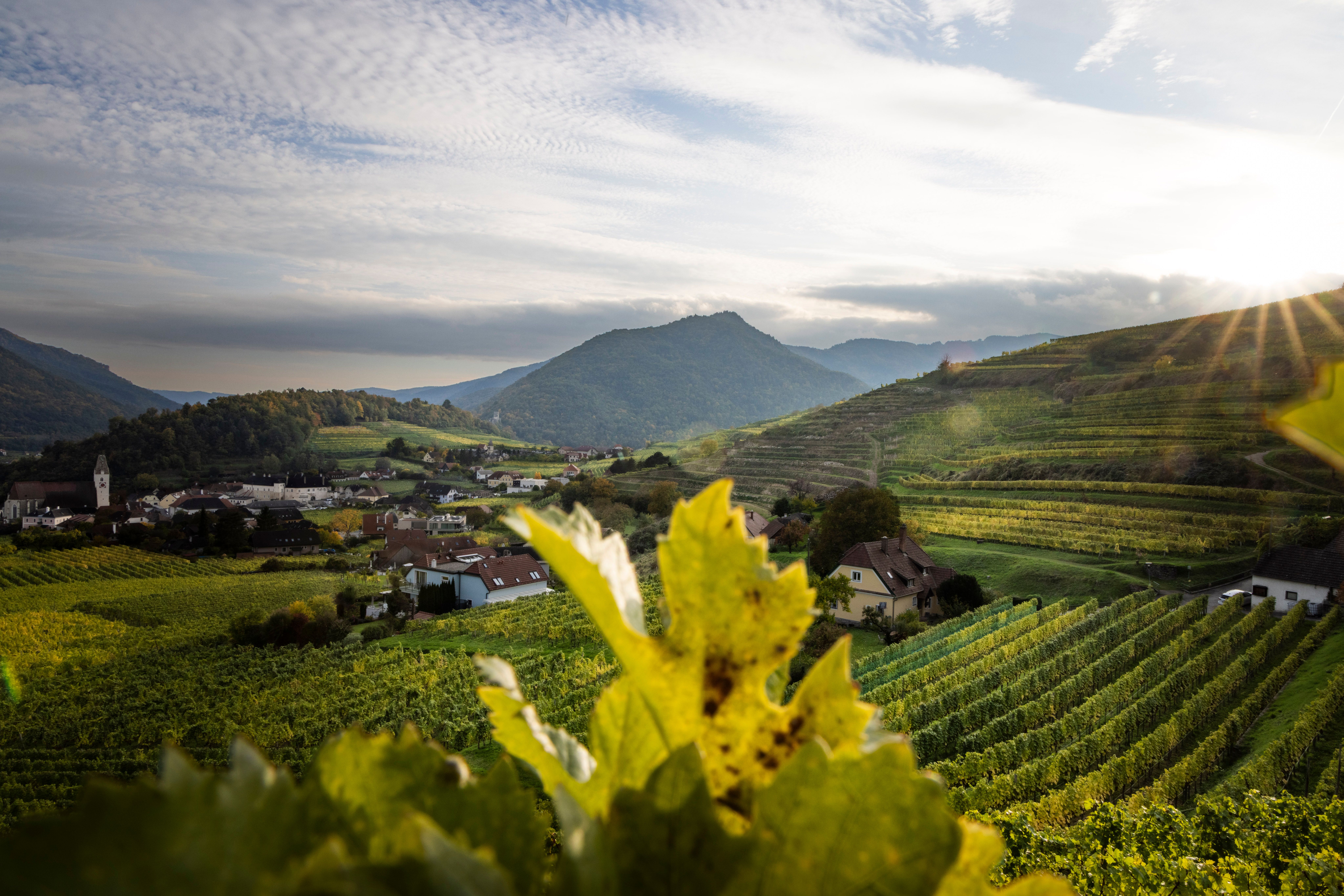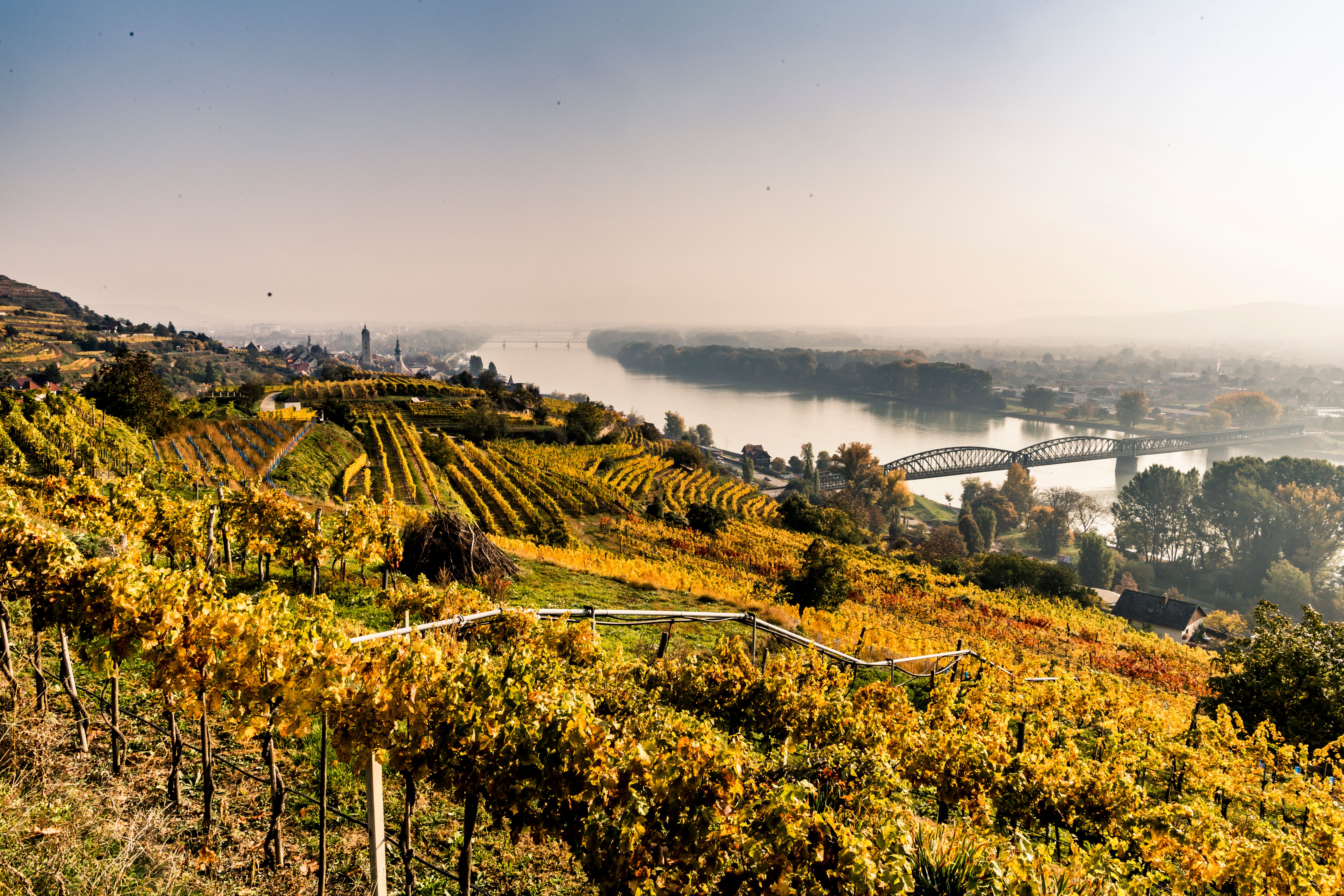
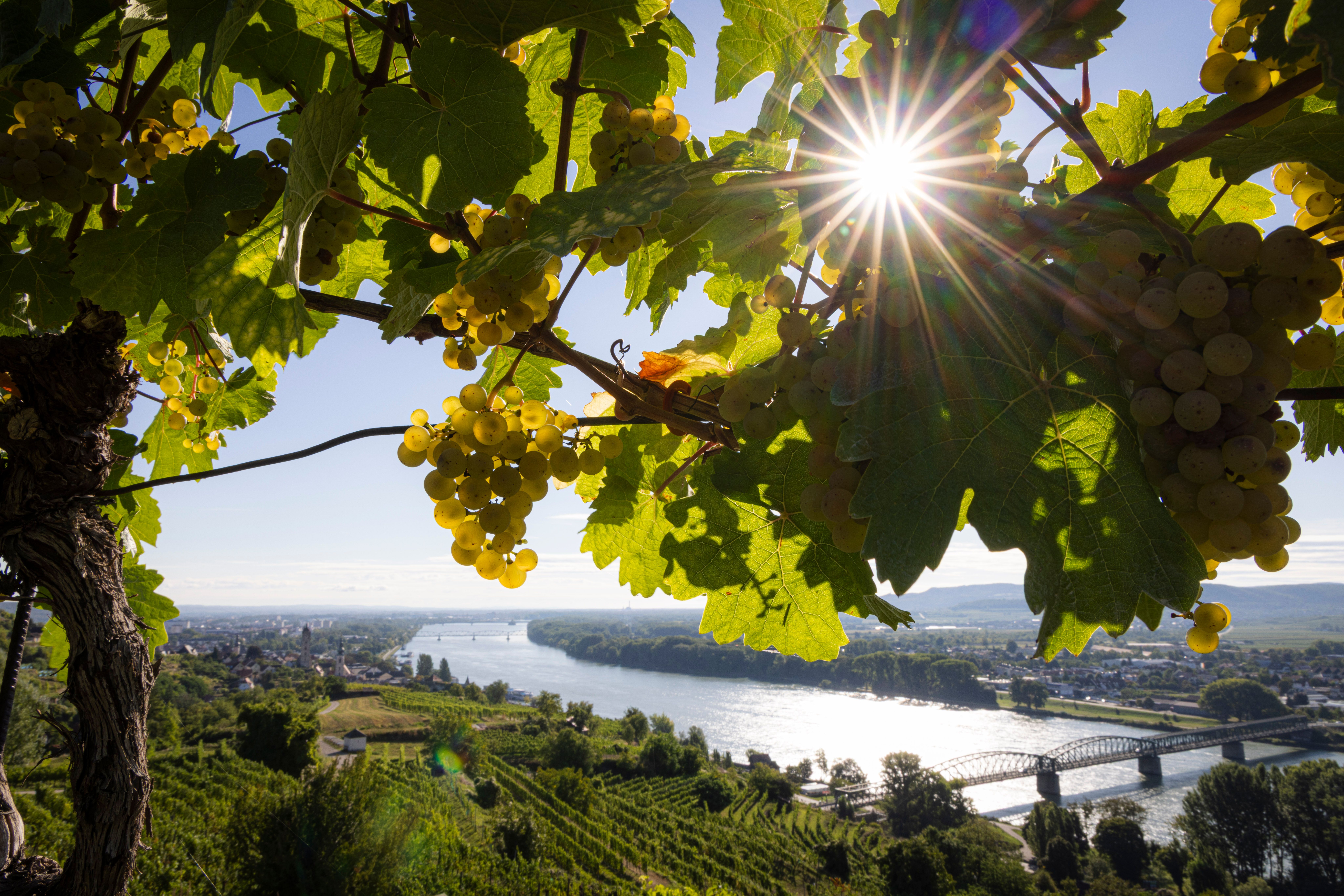
The world-renowned Grüner Veltliner and Riesling: the country’s most prominent wine-producing region enjoys recognition as a UNESCO World Heritage location. Kilometres of dry stone terraces give Wachau its typical appearance. Between Spitz an der Donau in the west and Unterloiben in the east, they characterise the region’s steep slopes, which demand a tremendous amount of manual labour from the winegrowers. A backdrop that is unrivalled.
If you want to explore Wachau on foot, why not take a walk along the Wachau World Heritage Trail. The route leads through the entire region in several stages – through the vineyards and medieval villages, past world-renowned wineries, wine taverns and award-winning restaurants.
Three different areas surrounding the historic town of Krems an der Donau offer different wines and settings to enjoy them. The “Kremstal long-distance hiking trail” connects them all: from the north to Senftenberg, where the best Rieslings grow. The east, where the metre-thick loess makes “Grüner Veltliner” – a variety of grape – so creamy. And the south around Göttweig Abbey and the area’s wine villages, such as Krustetten, which offer spectacular views of the Danube and the town of Krems.
Did you know that the city of Krems even has its own winery? The Stadt Krems winery also organises regular wine tasting sessions with Taste Krems. Just like the “Winzer Krems” at Sandgrube 13.
Friendly villages, gentle hills and a special rarity – the “Roter Veltliner.” Welcome to Wagram! The wine-producing region with a terrain that really stands out: the loess between the wine villages of Feuersbrunn, Fels, Kirchberg am Wagram, and Großweikersdorf towers up to 40 metres high. Here in the north of the Danube lies the area’s larger region, with a smaller part to the south around Tulln an der Donau and Klosterneuburg.
The “Diva of Wagram” – that’s what the “Roter Veltliner” grape variety is called. But a white wine, by the way! The name is derived from the reddish colour of the berry skin. It comes in all varieties: from light to complex. You shouldn’t leave Wagram without at least tasting a glass.
The largest wine town. The most spectacular world of wine. And some of the best Riesling vineyards in the country. It is not without good reason that Kamptal has a reputation as a first-class wine-producing region. The centre is the town of Langenlois, which also offers a contemporary architectural highlight in the form of the “Loisium”. Vinotheque, a wine experience, a cellar world – and much more!
You can hike along the Langenlois wine trail or up to the “Kamptalwarte” lookout tower on the famous Heiligenstein in Zöbing – great views included. But the small wine villages along the river Kamp also offer beautiful paths, rustic wine taverns and wine bars. You should also definitely try the sparkling wines of the Kamptal valley. They are among the best in the country.
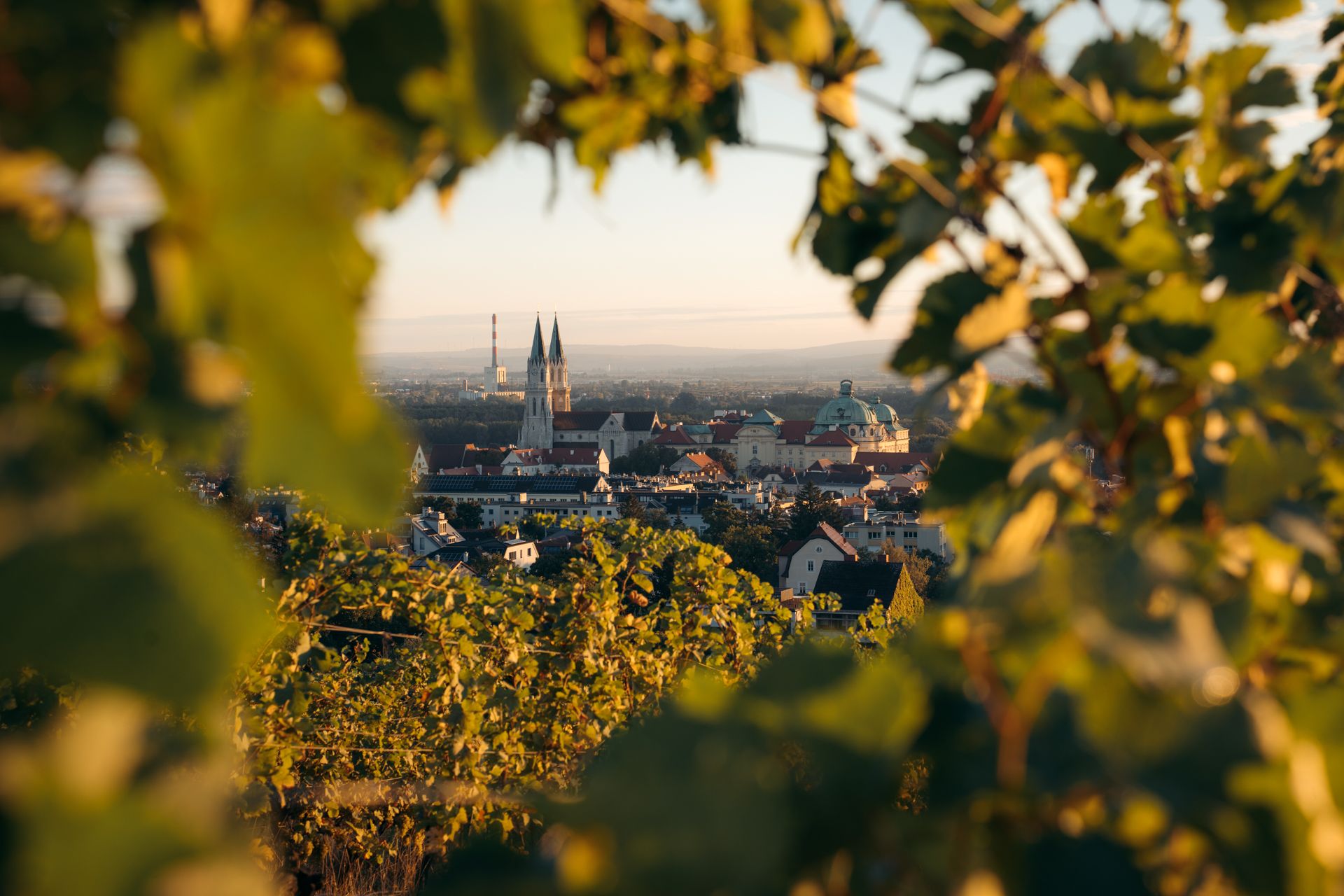
A stroll through the alleyways is a must, as is a visit to Klosterneuburg Abbey. Wine has been made here for over 900 years. Today, Klosterneuburg Abbey – a renowned wine and fruit estate – offers a broad selection of wines, sparkling wines and juices. You can taste and buy them in the abbey’s own wine shop.
It is only a few kilometres from here to Vienna. Anyone walking through the original districts of Weidling, Kierling, Kritzendorf, Höflein, Maria Gugging and Weidlingbach would hardly believe it.
Quaint and familiar: Lower Austria’s smallest and youngest wine-producing region boasts many things to discover. Insiders appreciate the Riesling hailing from Traisental. But there is also no way of avoiding the “Grüner Veltliner.” This grape variety grows in all parts of the region: from Wölbing to Würmla, from Atzenbrugg to Traismauer. The southern endpoint is the provincial capital of St. Pölten.
Cellar alleys nestle on the edges of the terrain and in hollow paths. One particularly beautiful feature: the “Ahrenberger” and “Ehrenberger” cellar alleys between Sitzenberg-Reidling and Traismauer. Here, they are proud that at least one “Heuriger” or cosy wine tavern is open all year round.
Walk in the footsteps of the Romans and savour red wine: welcome to the easternmost wine-producing region along the Danube. Carnuntum – in short: plenty of history and many hours of sunshine. This is precisely why varieties such as “Zweigelt” and “Blaufränkisch” feel so at home between Göttlesbrunn, Hainburg and Prellenkirchen. White wine fans will also be sure to get their money’s worth with Grüner Veltliner, Pinot Blanc and Chardonnay. Here, they taste slightly more well-rounded and substantial.
The Spitzerberg in Carnuntum is the easternmost vineyard in Austria. Some of the best red wines in the country originate from here – and the historic town of Hainburg an der Donau or the Roman town of Carnuntum are not far away either.