Extraordinary. The Wachau is simply a very special place. You can feel it from the moment you arrive – when you cycle along here, let your gaze wander over the Danube and the vineyards, or stroll through the medieval streets. It has been official since 2000: the Wachau is part of the UNESCO World Heritage Site – the highest distinction that a cultural and natural site can achieve worldwide. This did not happen automatically. The region owes this to committed citizens who fought against a planned Danube power plant. But more on that later. First, a clarification of terms is needed: what exactly is the Wachau World Heritage Site?
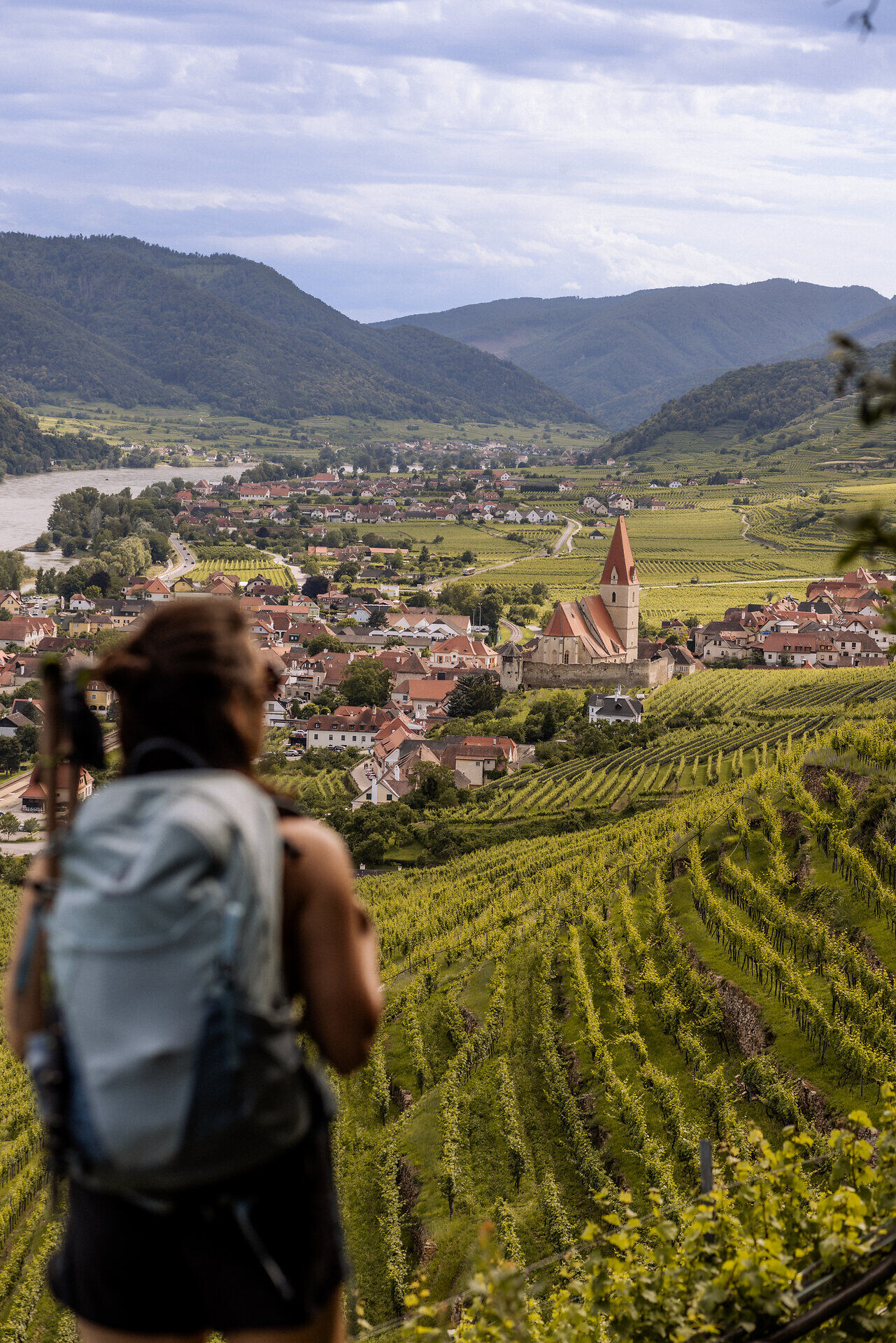
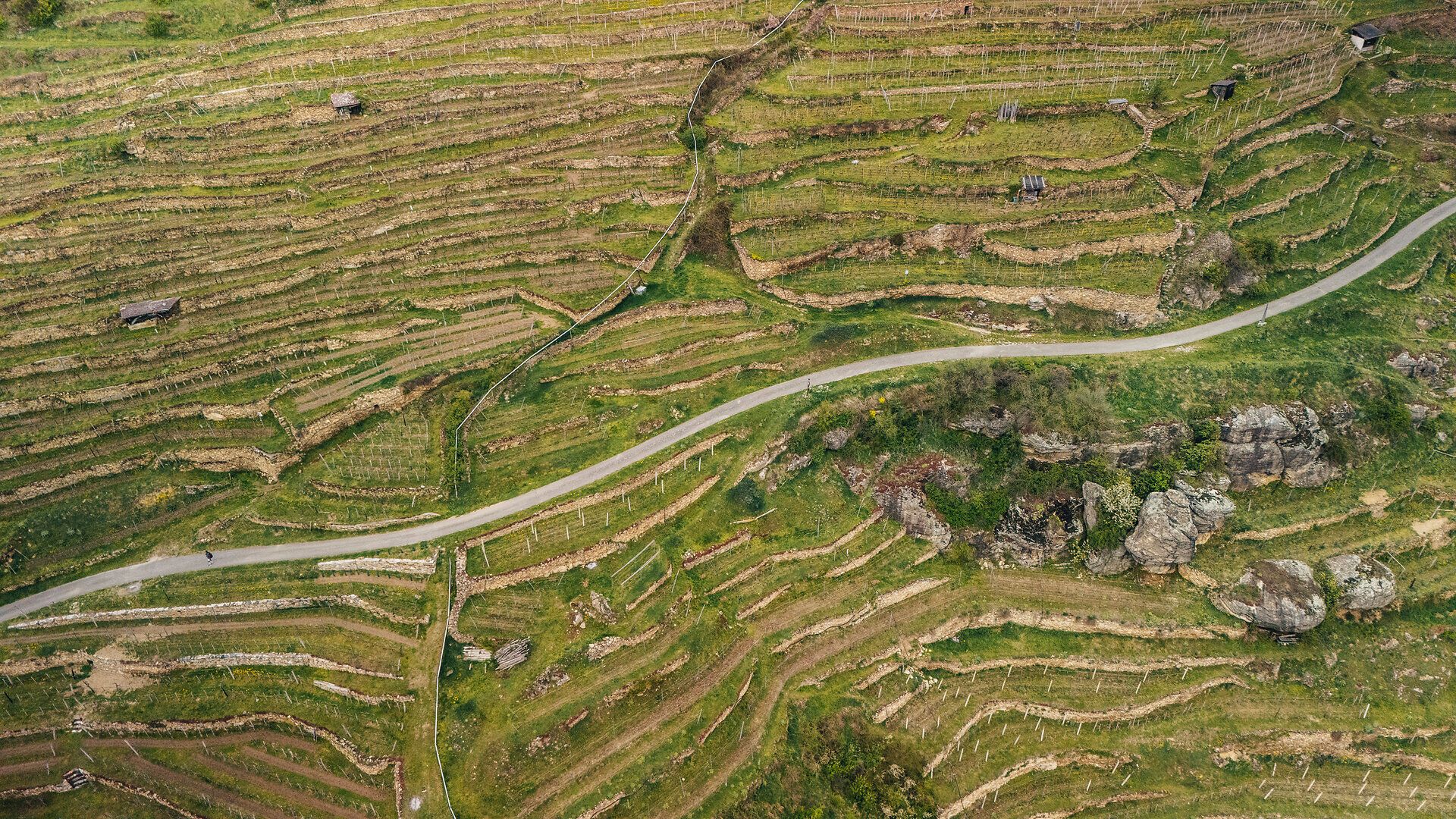
The Wachau World Heritage Site comprises fifteen World Heritage communities on both banks of the Danube. The town of Melk with its imposing Melk Abbey marks the western beginning. To the east is the cultural city of Krems an der Donau with its impressive old town and the Kunstmeile Krems. In between lies one of the most beautiful cultural landscapes in Europe – with medieval villages, apricot orchards and steep vineyard terraces held in place by hundreds of kilometres of dry stone walls. To this day, the stone walls are built by hand – a craft that is part of the UNESCO World Heritage site. The Danube connects everything – it is just under 40 kilometres from Melk to Krems. The Danube cycle path runs along the right and left banks, and if you want to switch sides, it is best to take the roll-on roll-off ferry.
The products of this impressive landscape end up in glasses and on plates: world-renowned white wines, classic and modern dishes – in rustic wine taverns as well as in award-winning restaurants. Everyone finds their place in the Wachau – and with a view of the water, everything tastes even better. Especially in summer, when fresh Wachau apricots are in season. Then you can't leave the area without at least trying an apricot dumpling.
The Danube flows leisurely through the Wachau region – one of only two sections in Lower Austria where it can do so freely. In the 1970s, there were plans to build a Danube power station near Rossatz – complete with metre-high dam walls. This was finally prevented in 1983, and the Wachau region focused on protecting its unique cultural landscape. This approach was recognised in 1994 with the European Diploma and finally in 2000 with the UNESCO World Heritage title.
It is no coincidence that the region's most important hiking trail is called Welterbesteig Wachau - Wachau World Heritage Trail: it covers 180 kilometres through the entire World Heritage region – with 14 stages offering a wide variety of impressions. You hike through medieval alleys, up into the vineyards, past wine-growing farms, churches and castles – with unique views included.
The rich history of the region can be seen in the façades of the historic houses – many of which were closely linked to monasteries and abbeys. Often painted in pastel shades, the former vineyards still blend harmoniously with each other today. Architectural heritage that is still lived in, worked in and used for wine production today – the Wachau is anything but a backdrop, but rather a living space for generations. The task of the Wachau World Heritage Association is to gently develop this heritage. This is where everything comes together – for example, in projects such as Churches on the River, where you can learn more about the sometimes hidden sacred buildings of the Wachau. But nature conservation is also a top priority. The renaturation of the Danube is being promoted in many small sections – for example, in the Pritzenau near Rossatz.
If you spot sheep in the Wachau region, you are probably near the dry grasslands – an important part of the Wachau cultural landscape and habitat for numerous endangered animals and plants. In summer, the sheep help to maintain the landscape – together with the Wachau Volunteers. These are volunteers who come to the Wachau from all corners of the world. They also help to remove non-native trees and shrubs. This limits the spread of neophytes such as the tree of heaven.
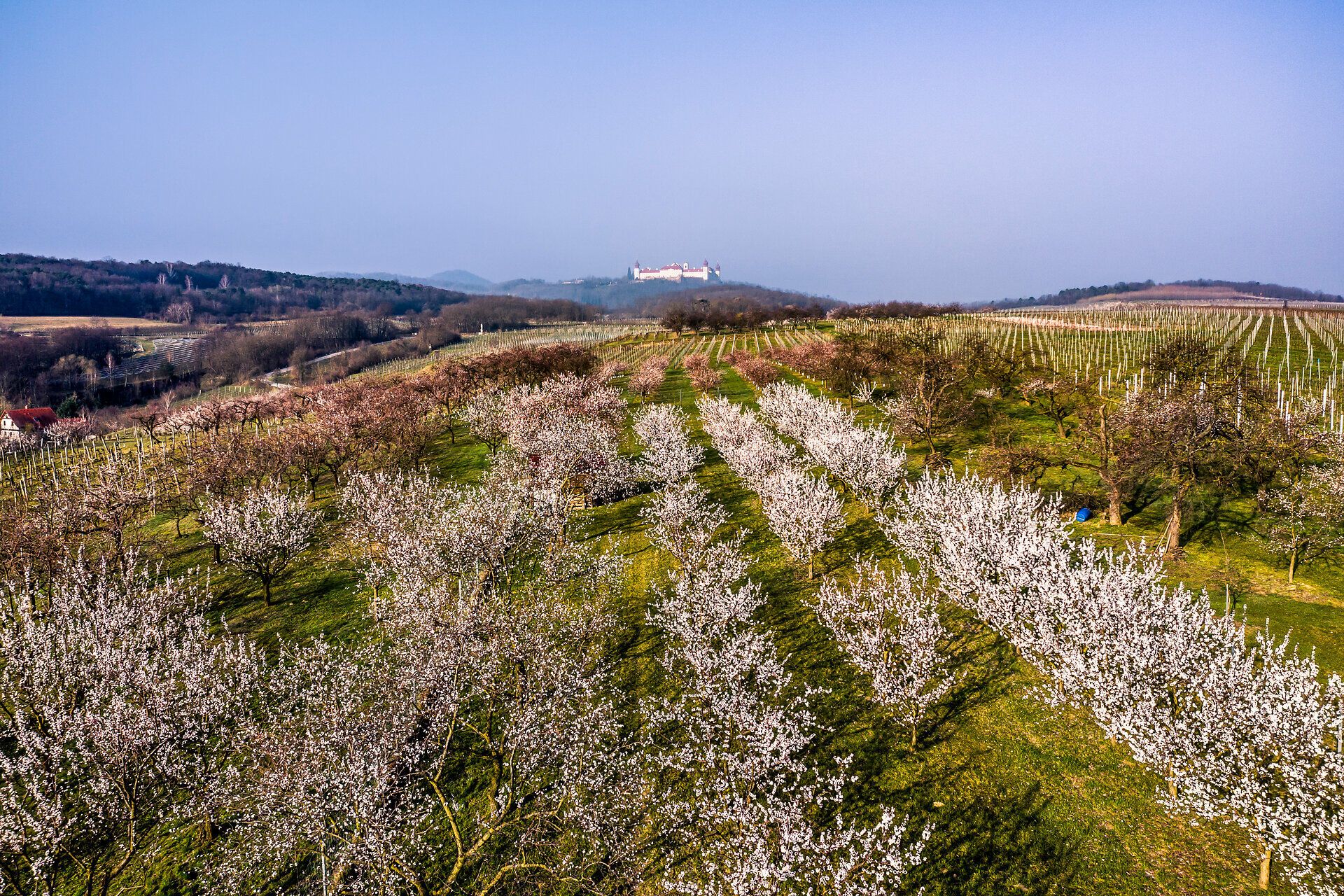
Many sustainability projects in the Wachau World Heritage Site also have direct benefits for visitors – the Wachau apricot blossom, for example. On weekends when the apricot trees are in full bloom, a discounted day ticket for public transport is available.
From apricots to wine, from the unique landscape to the artistic and cultural treasures: the Wachau World Heritage Site is anything but ordinary. A region for people who want to experience something special.