GPX Track: DRW Stage 6 North

Cycling tour Starting from Krems
From medieval town to art and garden city Today's tour takes you along the north and south banks of the Danube out of the Wachau cultural landscape. You start in Krems an der Donau, a beautiful commercial and cultural town, and cycle along the Danube cycle path to Tulln an der Donau, which is also known as an art and garden town. On the way there, you will pass Altenwörth and Zwentendorf an der Donau, among others, until you finally reach your destination on the south bank.
From medieval town to art and garden city Today's tour takes you along the north and south banks of the Danube out of the Wachau cultural landscape. You start in Krems an der Donau, a beautiful commercial and cultural town, and cycle along the Danube cycle path to Tulln an der Donau, which is also known as an art and garden town. On the way there, you will pass Altenwörth and Zwentendorf an der Donau, among others, until you finally reach your destination on the south bank.
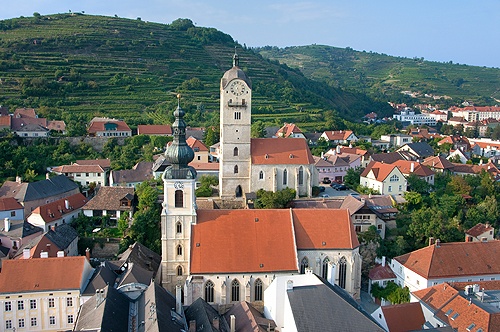
Krems, a city known for its wine, commerce, shopping, culture, schools, and universities, captivates visitors with its location: nestled between the Danube and the vineyards of the Krems Valley ("Kremstal" in German), the Old Town stretches along the Wachau region, a UNESCO World Hertige site. The Steiner Gate, Krems’ landmark dating from 1480, is a reminder of the city’s eventful history, as are the many 16th-century townhouses from the era when Protestant merchants made Krems wealthy. A stroll along the Obere and Untere Landstraße, as well as a visit to the early-Gothic Gozzoburg, the Kunsthalle, or the Caricature Museum, are all worthwhile. An absolute highlight is the Landesgalerie Niederösterreich, which opened in 2019 and is located on the Kunstmeile Krems.
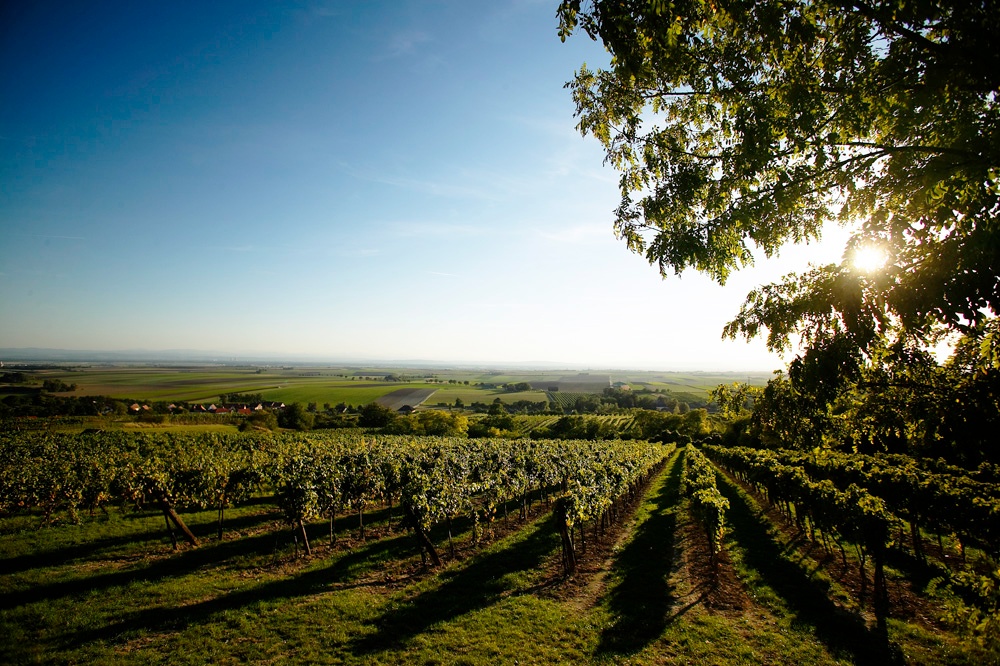
Just beyond Krems lies a new destination: the Wagram region. Interlocking vineyards that blend into rolling fields and shady sunken paths—carved out of the loess by water over millions of years—define the Wagram. The deep loess soils provide ideal conditions for finely spiced, full-bodied wines. This applies not only to the Grüne Veltliner but also to the Roter Veltliner.
The Weritas wine shop in Kirchberg am Wagram features 50 top winemakers with over 250 wines. Kirchberg is also home to the Alchemists’ Park and the Alchemists’ Museum, and not far away are the Pleyel Museum and the Pleyel Cultural Center in Ruppersthal. Ignaz Joseph Pleyel, the Wagram’s most famous son, left this romantic wine village to make a sensation in Paris around 1800 as a composer and piano maker. Cyclists can explore the Wagram region along the discovery tours via five thematically organized bike routes.
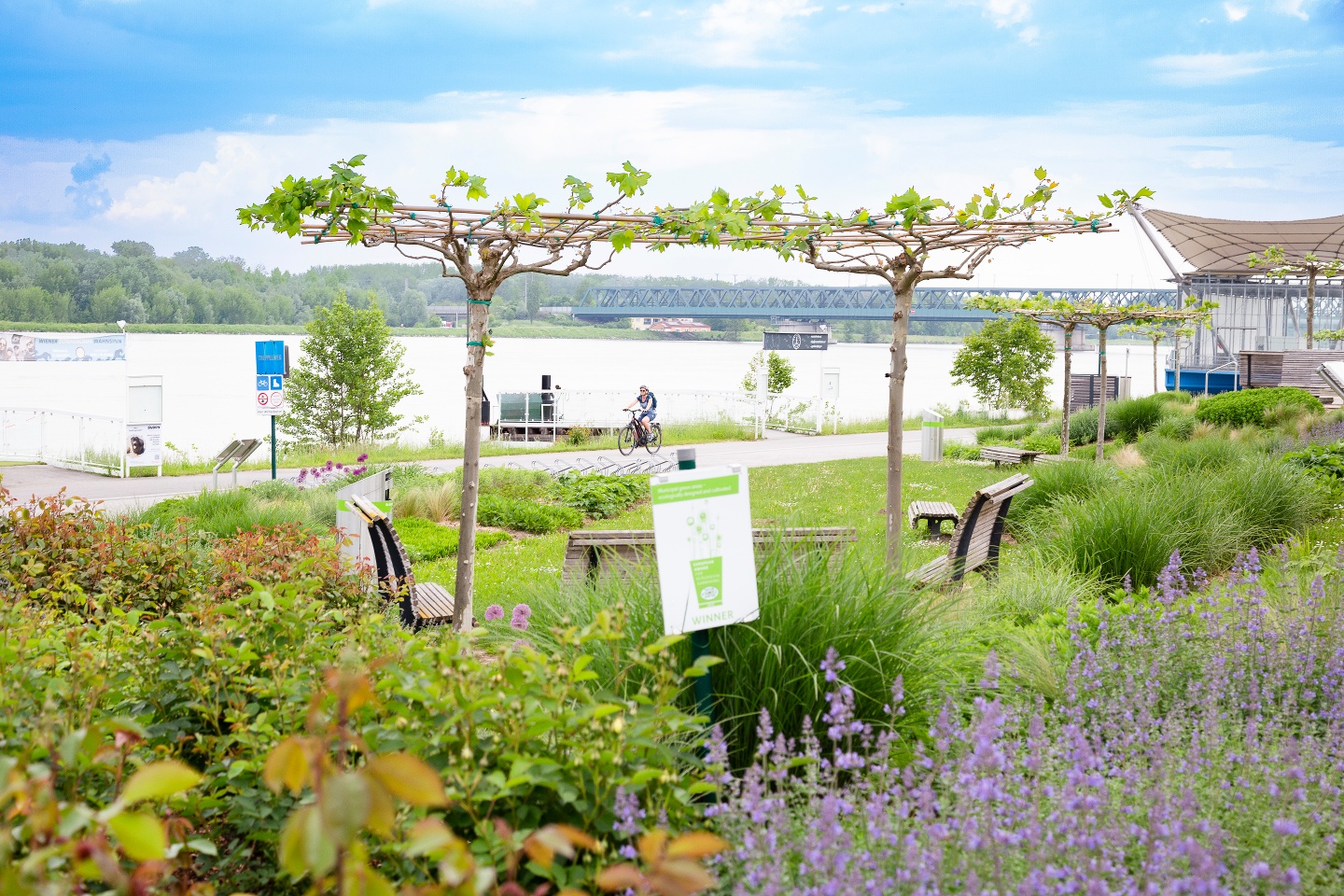
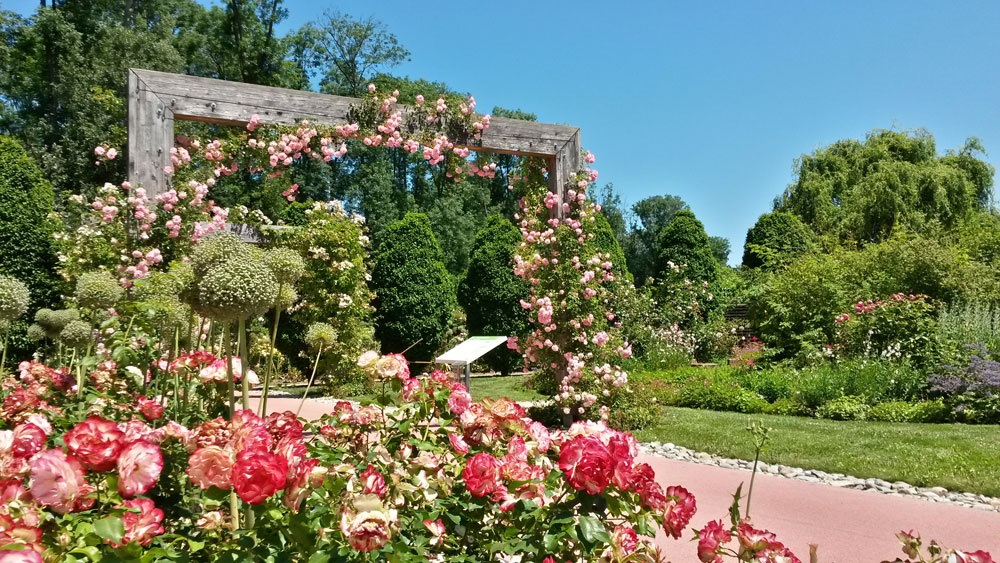
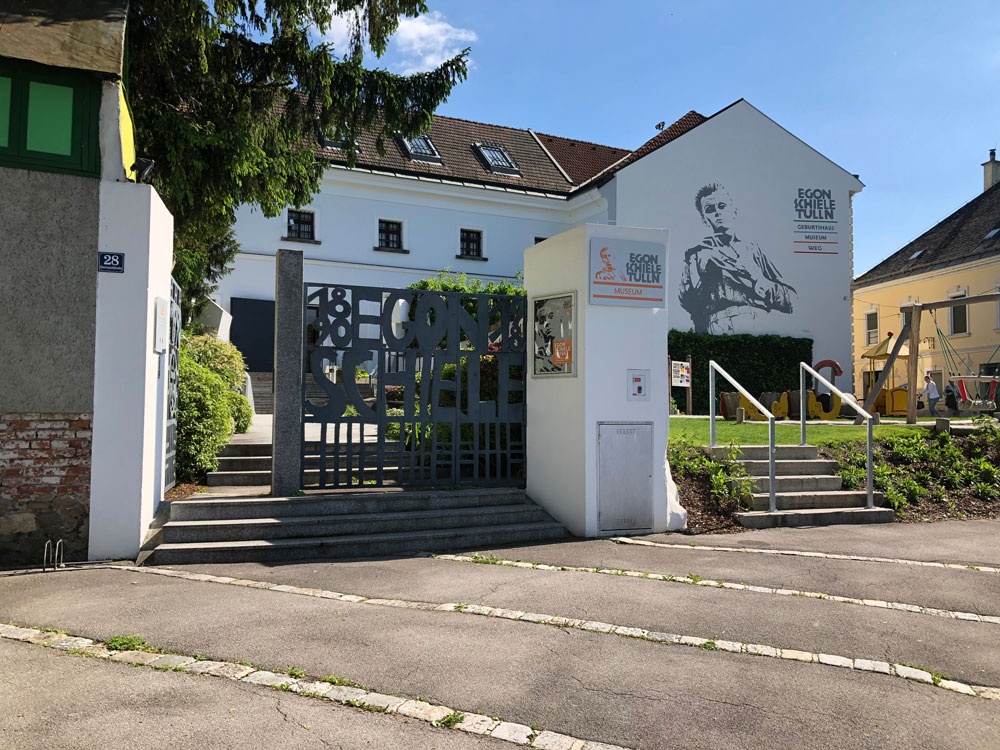
Finally, Tulln welcomes visitors. Right on the outskirts of town, you’ll pass through the grounds of GARTEN TULLN, Europe’s unique ecological garden experience featuring over 70 show gardens and many other attractions. At the Egon Schiele Museum, the Egon Schiele Birthplace, and the Egon Schiele Theme Trail, visitors can experience the world-famous, exceptional artist. Tulln’s Danube promenade is attractively designed, and in just a few minutes you can walk from one attraction to the next, including the Tulln City Museum, which houses the Tulln Roman Museum, an exhibition on the Imperial Convent, and the Virtulleum.
Krems an der Donau – Altenwörth – Zwentendorf an der Donau – Kleinschönbichl – Pischelsdorf – Langenschönbichl – Tulln an der Donau
Route description:
Your tour begins in Krems an der Donau. The old town of Krems is impressive in itself, as it is a UNESCO World Heritage Site. The Steiner Tor gate is particularly noteworthy as it is considered the city's landmark. In addition, there are countless churches, gates, houses and museums to discover – a true city of culture. Wine connoisseurs will also feel at home here, as wine growing is not only economically important with numerous wineries, but also an important part of this city.
The Kremstal wine-growing region stretches along the Kremstal Wine Route on both sides of the Danube around the old wine town of Krems. Wine has been grown here for centuries, and wine is still omnipresent in Krems today. At the eastern gateway to the Wachau region, the Kremstal is one of Austria's oldest wine-growing areas. Wine has been grown on the fertile primary rock and, above all, loess soils for many centuries.
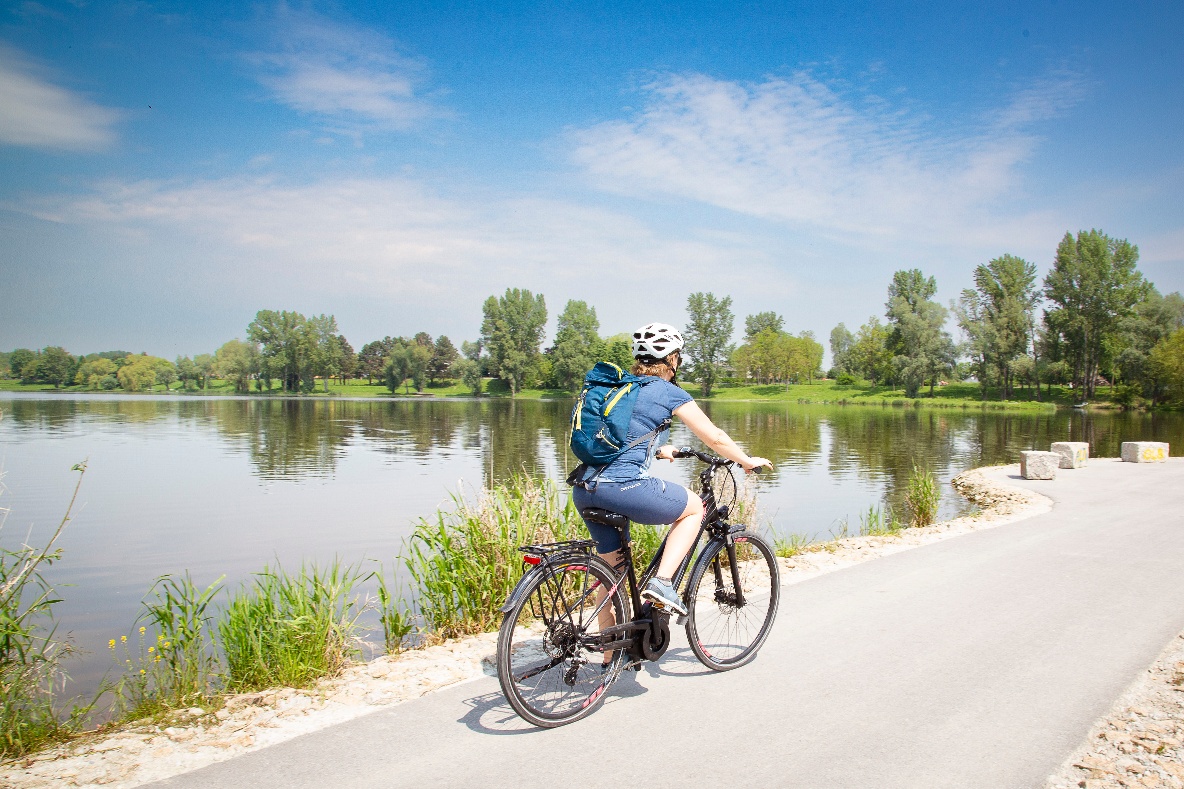
You then cross the Krems and follow the river of the same name until it flows into the Danube. You then cycle along the Danube Cycle Path directly along the river and enjoy the beautiful landscape panorama that unfolds before you. The landscape here is similar to that of the Wachau, with green hills covered in numerous vineyards. You will cycle a long way along the Danube until you have to change sides at the Altenwörth Danube power station and continue your tour on the south bank.
Once there, cross the Traisen and drive back to the banks of the Danube. Here you are also in the Wagram Wine Route area. The Wagram is a mighty escarpment that stretches north of the Danube. South of the Danube are the small wine-growing and wine tavern villages of the Tullnerfeld. The Wagram wine-growing region covers 2,400 hectares.
Next, you will come to the small municipality of Zwentendorf an der Donau, which has a special attraction: Austria's first and only nuclear power plant, which was never put into operation. Continue along the cycle path, which you leave at Kleinschönbichl, moving away from the Danube for a short while. Take the country road through the two villages of Pischelsdorf and Langenschönbichl and continue on the L 2148 to Große Tulln. Once you have crossed the river, return to the banks of the Danube on the other side.
Here you cover the last few metres on the cycle path before reaching your destination of Tulln an der Donau. This Lower Austrian town offers a wonderful end to your tour. In addition to its many sights, the town is characterised by numerous green spaces and gardens. GARTEN TULLN is also located here. The former Roman cavalry camp of Comagenis is known for its diverse art and cultural offerings and its splashing fountain.
In the center of Krems. Please be aware of the different parking zones. For more information, visit http://www.krems.info/de/home/service/orientierung/parken-in-krems/
Please note: Park-and-ride facilities may require a fee.
You drive directly to Krems via the B35.
Krems is accessible via several intercity bus and train routes. Schedules are available online at www.oebb.at, www.postbus.at, and www.anachb.at
Bicycles are not allowed on buses.
Leider können wir Ihnen zum jetzigen Zeitpunkt keine Wetterdaten für den Ort anzeigen.
Responsible for the content of this tour
Danube Lower Austria Tourism Ltd.
Last update: 05.10.2025
Letzte Änderung: 28 Aug 2026
