Explore destinationDonau.com

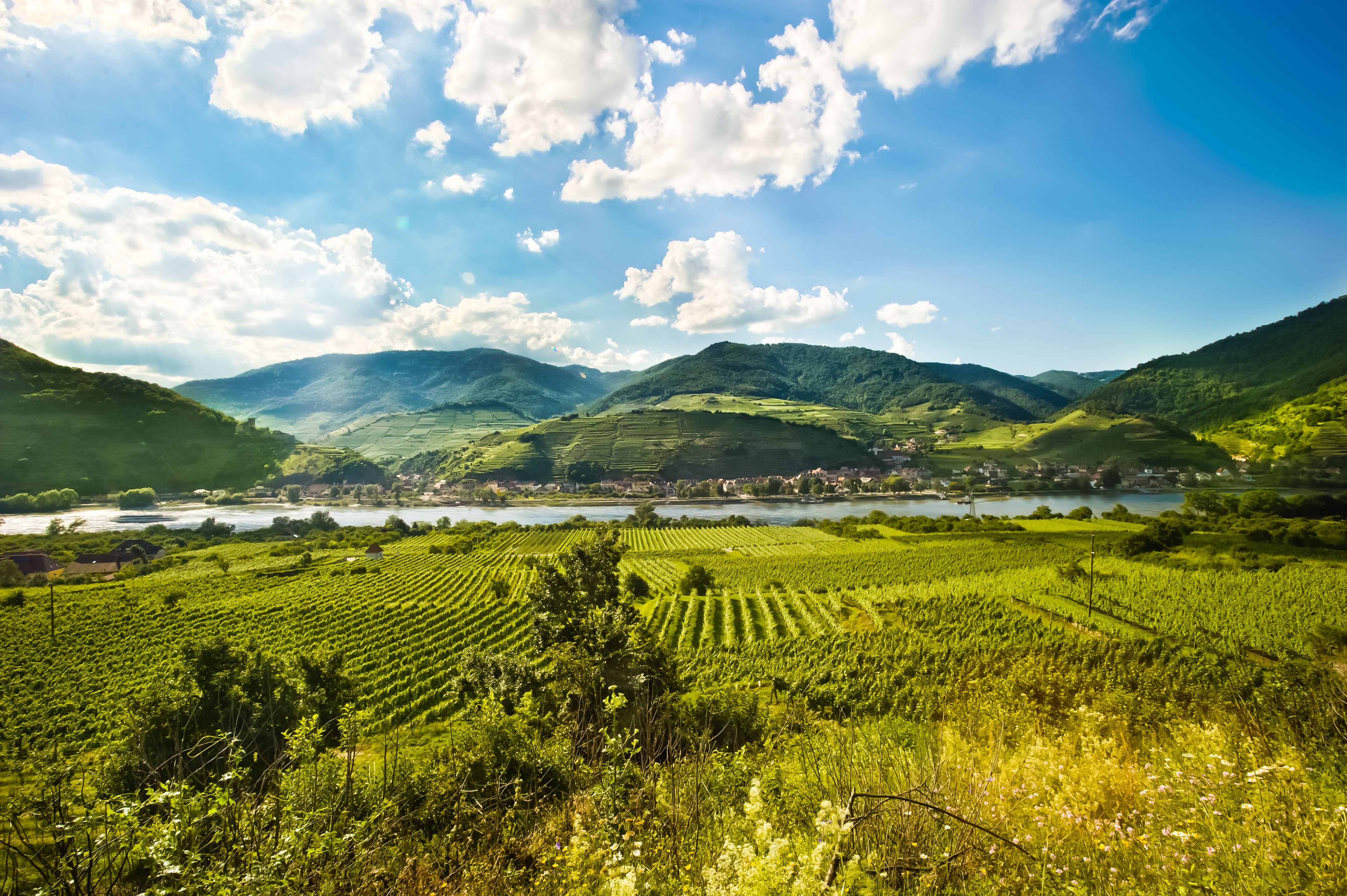
Ancient wine culture and state-of-the-art wineries. Time-honoured customs and elegant wine events. The finest white wines in the world and the down-to-earth cosiness of the wine taverns. The wine-growing regions along the Danube in Lower Austria lead through a unique wine country full of contrasts and experiences.
Wine growing has a two thousand year (cultural) history along the Danube Valley. Although it is assumed that the Celts and Illyrians already pressed wine from wild vines, systematic wine growing began during the Roman occupation.
Winegrowing reached its peak in the Middle Ages, with large parts of what is now Vienna planted with vines and the Cistercians "exporting" their already very detailed knowledge of wine to the Danube region – a development that has left visible and palatable traces to this day.
Vinea Wachau (Vinea Wachau Nobilis Districtus) was founded in 1983 as an association of Wachau winegrowers. The winegrowers of Vinea Wachau regard viticulture as a true craft based on tradition, precision and respect for nature. Their common goal is to reflect the origin and vintage as authentically as possible – a claim that is anchored in the three brands Steinfeder, Federspiel and Smaragd.
The character of the wines is shaped by the location, soil, weather and the careful work of the winegrowers. Hand-picking is mandatory for all members and an expression of their philosophy of quality over quantity. The Vinea Wachau quality code stands for natural wine production, guaranteed origin and strict self-monitoring. In addition, each winery undertakes to refrain from enrichment, aromatisation and other technical interventions – so that each wine authentically reflects the typical Wachau style.

Great wine is not a question of alcohol.
Simon Gattinger and his partner Marlies Auer are happy to take the time for a tasting – just arrange it in advance. "Great wine is not a question of alcohol," says Simon Gattinger. For him, it's about origin and the many details that distinguish his vineyards: Burgstall, Höhereck, Kreutles, Klostersatz, Loibenberg, Mühlpoint – the young winemaker wants to bring the subtle differences to life.